
Navigating Adult ADHD: A Comprehensive Guide
Updated: Aug 12
ADHD is a neurodevelopmental condition, but it doesn’t define your potential. This guide will help you understand your brain, honor its strengths, and find supportive strategies for daily life in a warm, non-judgmental way.
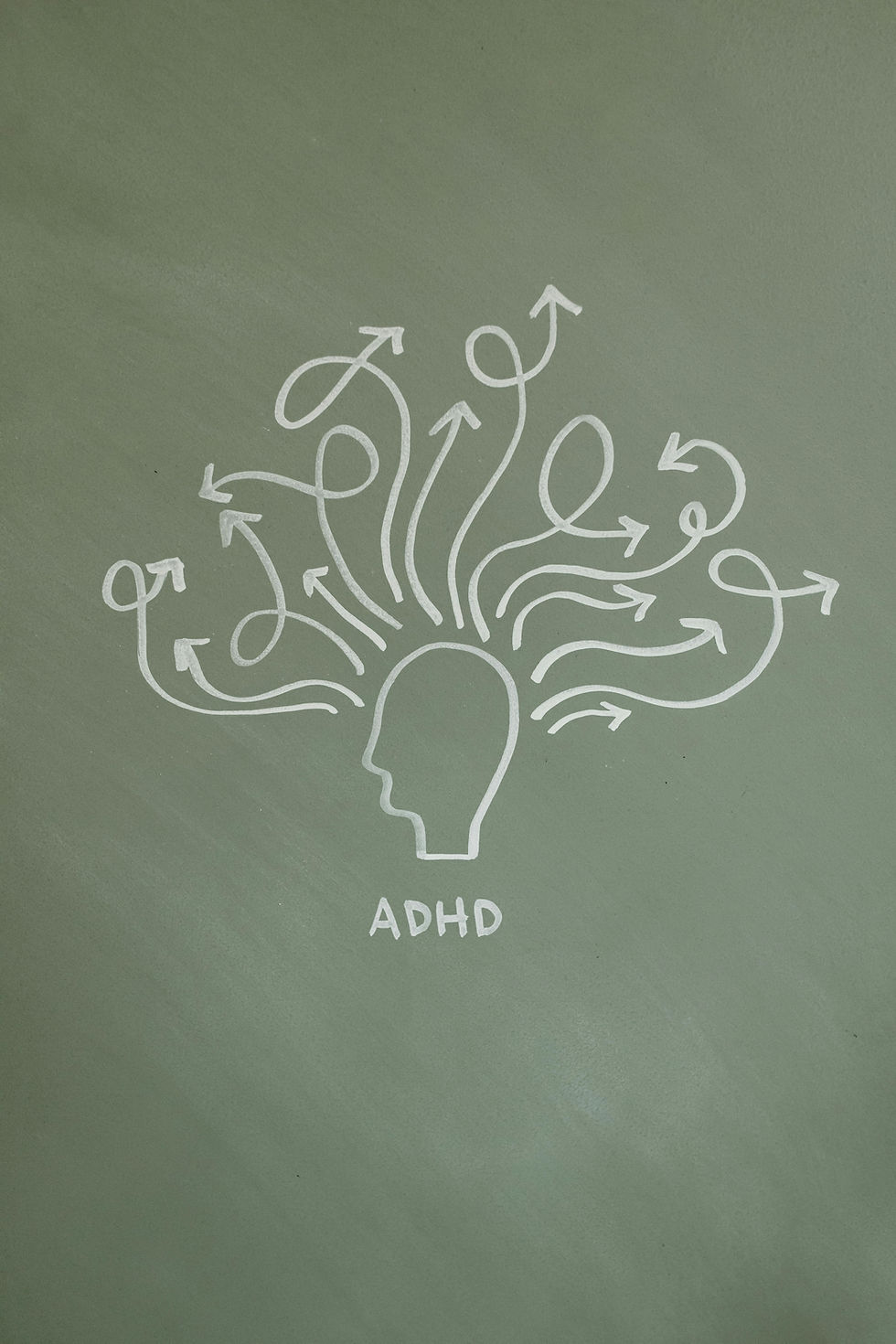
Overview of Adult ADHD Symptoms
Inattention & Distractibility: Difficulty sustaining focus, following through on tasks, or remembering details. Adults with ADHD often get easily distracted or forget appointments and tasks.
Executive Dysfunction: Challenges with planning, organizing, and managing time. It may be hard to stay organized, keep up with projects, meet deadlines, or stick to routines.
Hyperactivity & Impulsivity: Feeling restless, fidgety, or “on the go,” and acting on impulse (e.g. interrupting conversations or making quick decisions without thinking). You might speak out of turn or struggle to wait, which can lead to challenges in work or social settings.
Emotional Regulation: Many adults with ADHD experience intense or quickly changing emotions. They may have a shorter fuse or feel frustration and mood swings more strongly, finding it difficult to moderate emotional reactions. (For example, small setbacks might cause big frustration, or one’s mood may swing rapidly.)
Note: These symptoms are part of how the ADHD brain is wired – they are not character flaws. ADHD typically starts in childhood, but many aren’t diagnosed until adulthood. Understanding these symptoms can be the first step toward self-compassion and effective coping.
Common Challenges in Daily Life
Time Blindness: A frequent ADHD experience of losing track of time. It’s an inability to sense how much time has passed or to estimate how long things take. You might underestimate prep time and run late or miss deadlines. (This isn’t laziness – the ADHD brain literally processes time differently.)
Chronic Overwhelm: Juggling work, family, and life can feel like “too much.” Many with ADHD experience overwhelm when faced with complex tasks or busy environments, sometimes leading to “ADHD paralysis” – feeling frozen and unable to start tasks when everything hits at once.
Work Performance Issues: Disorganization, procrastination, and distractibility can interfere with jobs or school. Adults with ADHD may miss deadlines, have messy workspaces, or struggle with consistent performance. This can lead to stress about meeting one’s potential at work, despite often working very hard.
Relationship Strain: ADHD symptoms can cause misunderstandings and frustration in relationships. For example, a partner might feel hurt if you forget plans or seem not to listen. Distractibility, impulsive comments, or emotional outbursts can lead to conflicts or a feeling of walking on eggshells. Both the person with ADHD and their loved ones may feel unappreciated or worn out if these patterns continue.
Remember: All of the above challenges are manageable with the right strategies and support. They are common to the ADHD experience – you are not alone, and with understanding, partners and colleagues can learn to support these differences rather than misinterpret them.

Strengths of the ADHD Brain
Living with ADHD isn’t just challenges – there are superpowers that often come along with this brain style. Many adults with ADHD discover unique strengths, such as:
Creativity & Innovation: The ADHD mind can think outside the box and generate original ideas. Research finds that people with ADHD often show higher levels of creative thinking and problem-solving. In fact, adults with ADHD are more likely to identify creativity and even humor as personal strengths. This inventive spirit can shine in art, entrepreneurship, and any role requiring new perspectives.
Hyperfocus: While attention can wander, when something truly interests an ADHD brain, it can lock in intensely. This hyperfocus is a state of deep, passionate concentration on a task of great interest. Many note that hyperfocus, when directed toward positive goals (like a work project or hobby), enables high productivity and mastery of complex skills. It’s like having a “flow state” superpower – once you get started on the right thing, you might excel beyond what others can.
High Energy & Enthusiasm: Boundless energy and enthusiasm are often mentioned as ADHD positives. You might have a vibrant, dynamic presence and a drive to pursue what excites you. When channeled well, this energy fuels productivity and passion for projects and people you care about. It can make you fun, engaging, and resilient – able to keep going when others tire out.
Other strengths many ADHD adults report include: resilience in the face of obstacles (you’ve been adapting and trying new strategies your whole life!), empathy and sensitivity (some feel things very deeply, which can foster compassion), spontaneity and openness to experience, and a great sense of humor. Importantly, recognizing and using your strengths is not just feel-good – it’s proven to improve well-being. Embracing what you excel at gives you confidence to handle the harder stuff, and it reminds you that ADHD also comes with gifts.

Coping Strategies for Daily Life
Finding what strategies work for you is key. Here are some science-backed coping tools and habits that adults with ADHD find helpful:
Establish Daily Routines: Structure can be your friend. Setting up consistent daily routines for mornings, work, and evenings creates external scaffolding for your day. A well-structured routine provides clarity, reduces decision fatigue, and improves focus and organization. Start small – for example, a morning routine of same wake time, breakfast, review to-do list can anchor your day. Routines shouldn’t feel like a rigid schedule imposed on you; you can design them your way, with flexibility and fun built in, so they support you without feeling stifling.
Medication Management: ADHD medications (stimulants and non-stimulants) can significantly reduce symptoms for many adults. Stimulant medications (like methylphenidate or amphetamines) are often first-line treatments that improve focus and impulse control. Non-stimulant options exist as well. Always work with a doctor to find the right medication and dosage if you choose this route. Medication can “turn down the noise” of ADHD symptoms, making other coping strategies easier to implement.
ADHD Coaching: Some adults benefit from working with an ADHD coach or life coach. Coaches help you build practical skills for organization, time management, and goal-setting. They act as a supportive accountability partner – for instance, you might check in weekly, set small goals like organizing one room or planning your week, and problem-solve barriers together. Over time, coaching can teach you new routines and habits tailored to your life.
Mindfulness & Mind-Body Practices: Mindfulness meditation and similar practices can actually train attention and reduce stress. Regular mindfulness exercises have been shown to help adults with ADHD improve emotional regulation and resist distractions. Even a few minutes a day of breathing exercises, yoga, or mindful walking can center your mind. If sitting meditation is hard (totally understandable with ADHD!), try active or guided mindfulness – for example, focus on sensations during a nature walk or use a meditation app. These practices strengthen your brain’s ability to pause, notice, and choose your response rather than reacting impulsively.
Body Doubling: This strategy has become popular in ADHD circles. Body doubling means working alongside someone else as you both do tasks – they don’t have to help you with the task, their presence just keeps you on track. Having a “body double” (a friend, partner, coworker, or even a virtual buddy on a Zoom call) adds accountability and a bit of external structure. It can turn a boring, hard task into a social or cooperative activity. Many find they procrastinate less and stay more focused simply because someone else is there. It’s surprisingly motivating and can also make chores more fun!
Tools, Apps, and Reminders: Don’t rely on memory – offload it to supportive tools. Use calendars, planners, smartphone alarms and reminder apps to cue your attention. Visual organizers like planners or color-coded lists can make tasks and time concrete. There are many ADHD-friendly apps that gamify organization and time management (Todoist, Notion, Remember The Milk, and others). Experiment to find what clicks: maybe a time timer clock for visualizing time passing, a whiteboard in your room for daily priorities, or apps that lock distracting sites when you need to focus. Such tools help externalize the structure that your brain might struggle to create internally, keeping you on track and even making organization feel fun.
Break Tasks into Steps: A simple but powerful habit: take any overwhelming task and split it into bite-sized steps. ADHD brains can feel paralyzed by big, unclear tasks – breaking them down not only makes it easier to get started, it also gives you little wins along the way. Write out each sub-step (e.g. instead of “Clean the house,” list “1. Load dishwasher, 2. Take out trash, 3. Fold laundry,” etc.). Tackle one at a time, and give yourself credit for each completion. This strategy combats the all-or-nothing paralysis and builds momentum.
Pomodoro Technique & Time Management Hacks: Since sensing time is hard, try using structured work/rest intervals. The Pomodoro method (e.g. 25 minutes focus, then a 5-minute break) can make tasks feel more doable and provide built-in rest. Set timers for tasks, use alarms to signal when to start preparing to leave, and create artificial deadlines for yourself ahead of real ones. These tricks guard against time blindness by making time visible and segmented. Over time, you’ll train yourself to initiate tasks earlier and stay aware of the clock.
Tip: Self-compassion is a strategy, too. It’s easy to beat yourself up over slips, but remember ADHD is a legitimate brain pattern. If a coping strategy fails one day, rather than saying “I’m so lazy,” try: “That tool didn’t work this time – what might help me more tomorrow?” A compassionate mindset will keep you more motivated to try new strategies than harsh self-criticism.

Reflection Prompts for Self-Awareness and Regulation
Journaling or reflecting on your experiences can build greater self-understanding. Writing things down slows down your racing mind and helps you notice patterns and progress. Here are some guided prompts to help you explore your ADHD in a constructive way. Consider writing a few bullet points or a journal entry for each, and even discussing your insights with a therapist or coach if you’d like:
“How does my ADHD show up in my day today?” – At the end of the day, reflect on when you noticed ADHD traits. What situations caused you to lose focus or act impulsively, and what situations felt easy or played to your strengths? This builds awareness of your daily patterns (e.g. “I focus well in the morning, struggle mid-afternoon”).
“What emotions am I carrying right now?” – Pause and check in with your feelings, especially during a stressful moment. Name the emotion(s) you feel (e.g. frustration, anxiety, excitement). Consider what might have triggered these feelings and how they manifest in your body (tense shoulders? racing heart?). This practice of labeling emotions can help you manage them, by moving you from living in the feeling to observing it.
“What tasks feel bigger than they actually are?” – We all have tasks we avoid because they seem overwhelming. Identify one task you’ve been putting off (paying a bill, writing an email). Ask yourself why it looms large – are you afraid of doing it wrong? Does it just feel boring? Then brainstorm ways to make it more approachable: Can you break it into subtasks? Buddy up with someone (body double) to do it? . Often, writing about the task deflates its power; you might realize “sending that email will only take 10 minutes – I can try a 10-minute focus sprint.”
“When did I feel most present and focused this week?” – Think of a moment or activity when you were really engaged and in the zone. What were you doing, and what factors helped (time of day, interest level, quiet environment, a deadline)? This question helps you pinpoint the conditions under which you thrive. You can then try to recreate those conditions intentionally (for example, if you focus well with music late at night, maybe allow yourself a creative project in that time).
“How can I show myself compassion right now?” – Especially on hard days, ask what you need and how you’d speak to a friend in your shoes. Are you expecting yourself to perform perfectly? Are you mentally berating yourself for something? Try to reframe your inner dialogue: acknowledge the effort you’re putting in and that it’s okay to struggle sometimes. You might write down a kind message to yourself or list 3 things you did right today. Regularly reminding yourself that you’re doing your best (and that that is enough) builds resilience and a more balanced view of your ADHD.
Feel free to journal your answers to these prompts in the space below or in a notebook. Over time, you may notice patterns – for instance, that your worst days happen when you skip exercise, or that you always get teary when overwhelmed. Such insights are incredibly valuable; they are clues to what strategies or supports might help you most. And remember, reflection is not about judgment, it’s about understanding yourself with empathy and curiosity.

Therapy and Support Options
You don’t have to navigate ADHD alone. There are many forms of support – professional and peer-based – that can make a big difference:
Therapy (Counseling): Working with a therapist, especially one familiar with ADHD, can help you build coping strategies and address emotional hurdles. A common approach is Cognitive-Behavioral Therapy (CBT), which focuses on practical skills (like breaking tasks down, reframing negative thoughts, managing stress). Therapy can also help with co-occurring issues like anxiety or depression, and provide a safe space to process frustrations (for example, talking through feelings of underachievement or the impact of ADHD on your self-esteem). Some therapists offer specialized ADHD coaching or skill-building groups as well. Do not hesitate to seek therapy. It is not about fixing you, it is about giving you tools and support.
I am a licensed clinical social worker in Milford, PA, seeing clients in person and virtually across Pennsylvania and New York. The first call is free.
Medication & Medical Support: As mentioned earlier, medication can be a cornerstone of ADHD treatment for adults. A psychiatrist or other prescribing doctor can evaluate you for medication. They will usually start low and adjust dosage to maximize benefits and minimize side effects. Stimulants often have an immediate effect on focus; non-stimulants may take a few weeks. It can be a trial-and-error process – so having medical support is key to find what works for you. Additionally, a doctor can help monitor any other health factors (like sleep problems) that affect ADHD.
ADHD Coaching: Beyond therapy, ADHD coaches specialize in practical, personalized support. They can teach you executive function skills – for example, how to use a planner effectively, or how to set up a system to organize your paperwork. Coaching is often very forward-looking and action-oriented: you set goals each week and the coach helps you stay accountable. This can be done one-on-one, or even in group workshops. Many find coaching helpful after they understand the basics of ADHD, as it bridges the gap between knowing what to do and actually doing it consistently.
Support Groups & Peer Communities: Sometimes the best support is knowing you’re not alone. Consider joining an ADHD support group – these might be local meet-ups or online groups/forums of people who get it. National organizations like CHADD and ADDA can help you find support groups (CHADD’s website lets you search local chapters, and ADDA hosts virtual support group meetings on specific topics). In a support group, you can share experiences, trade tips, and just vent or laugh about the daily ADHD grind with folks who won’t judge. Online communities (such as Reddit’s r/ADHD forum) are also valuable peer support spaces, open 24/7, where members ask questions and share advice in a science-informed, understanding environment. Being part of a community can greatly reduce the isolation or shame one might feel – you’ll quickly realize that many others face similar struggles, and together you can celebrate the wins (even small ones) and brainstorm solutions to the challenges.
Workplace and Academic Accommodations: If ADHD is impacting your job or studies, know that you have rights and options. Many employers and schools provide reasonable accommodations for diagnosed ADHD. This could include flexible scheduling, written instructions to supplement verbal ones, noise-cancelling headphones or a quiet workspace, extended time for exams, etc. Talk to your HR department or disability services office about what might help – sometimes a simple adjustment can dramatically improve your performance and stress level. Don’t view this as special treatment; it’s leveling the playing field so your skills can shine.
Educational Resources: Educating yourself and those around you is empowering. Learning more about how ADHD works can remove self-blame (“Oh, it’s an executive function issue, not me being ‘stupid’”) and inspire new strategies. Websites like those listed in the next section, books by ADHD experts, and even ADHD podcasts/webinars are excellent resources. Many therapists or clinics also offer Adult ADHD classes or group therapy where you can learn specific skills in a class-like format. Keep learning – the more you understand your brain, the better you can advocate for what you need.
Above all, remember that ADHD is manageable. With a combination of strategies, support, and possibly treatment, many adults with ADHD lead very fulfilling, successful lives because of their unique brains. It may take time to find the right mix of supports for you – and that’s okay. Be patient and kind to yourself on this journey.

Trusted Resources & Community Links
Below is a list of recommended resources for further information and support.
These organizations and communities are well-established in the ADHD world:
The Many Faces of ADHD by Jennifer L. Rowe, LCSW. A workbook built around the reflection prompts above, written for adult ADHD brains by a therapist who works with them.
ADDitude Magazine (additudemag.com) – A leading digital magazine focused exclusively on ADHD. ADDitude provides expert articles, webinars, and personal stories on every aspect of ADHD, from treatment and research news to day-to-day tips. (Their motto is “Inside the ADHD mind.”) The content is accessible and practical – great for learning about new strategies or just feeling understood. They also host online forums and free webinars with top ADHD experts.
CHADD (Children and Adults with ADHD) (chadd.org) – The largest nonprofit organization dedicated to ADHD education, advocacy, and support. CHADD offers evidence-based information on ADHD and runs the National Resource Center on ADHD. They facilitate local chapters and support groups across the U.S., and advocate for the ADHD community in policy and public awareness. CHADD’s website has a wealth of free fact sheets, toolkits, and an “Ask the Expert” webinar series. It’s a key resource for reliable information and finding support near you.
ADDA (Attention Deficit Disorder Association) (add.org) – A global nonprofit organization by and for adults with ADHD. ADDA focuses on adult ADHD education and networking. They host virtual support groups on specific topics (for example, for women with ADHD, for professionals, for LGBTQ+ ADHDers, etc.), plus webinars and conferences. ADDA is a welcoming community that delivers science-based info and a healthy dose of understanding – it’s a go-to for adults looking to connect with peers and learn coping tools tailored for grown-up life.
Reddit ADHD Community (r/ADHD) – A vibrant online peer support forum with over a million members worldwide. This community describes itself as an “inclusive, disability-oriented peer support group for people with ADHD, with an emphasis on science-backed information”. It’s active and anonymous – people post questions, success stories, struggles, and tips every day. You’ll find frank discussions on everything from medication side effects to dealing with ADHD in relationships. It’s a wonderful way to crowdsource ideas or just feel seen and heard by folks who understand exactly what you’re going through. (As with any online forum, keep in mind advice is based on personal experience; for medical decisions, always defer to professionals.)
(All links above were accessed in 2025-2026 to ensure up-to-date information. You can trust these resources to provide accurate, constructive guidance. Consider exploring them to deepen your knowledge or find a community of support.)
(Feel free to bring this handout to therapy or support group meetings. It can serve as a conversation starter or a journal guide as you continue learning about ADHD. Remember: ADHD may pose challenges, but with understanding and support, it can also come with incredible strengths. You’ve got this – one day at a time.)


Comments